The SaaS Revolution
Why Every Business is Becoming Software-Driven

Introduction: The New Industrial Revolution
If you’ve been in business over the last decade, you’ve seen it: software isn’t just a tool anymore—it’s the engine driving growth, efficiency, and innovation. Businesses of all sizes, from startups to Fortune 500 companies, are pivoting toward cloud-based solutions to stay competitive. Welcome to the SaaS revolution.
Software-as-a-Service (SaaS) has transformed from a niche option into a fundamental business strategy. Unlike traditional software, which requires installation, maintenance, and constant upgrades, SaaS delivers applications over the internet. This shift isn’t just technical—it’s cultural, operational, and strategic.
In this article, we’ll explore why SaaS is revolutionizing business, the benefits it brings, and how platforms like Arxcess Applications are enabling organizations to scale smarter and faster.
What Is SaaS and Why It Matters
Traditional Software vs. SaaS
In the past, businesses relied on on-premise software. Installing enterprise software required significant hardware investment, dedicated IT teams, and complex update cycles. Every upgrade came with downtime and costs.
SaaS flips this model on its head:
Delivered via the cloud, accessible anywhere with an internet connection
Subscription-based pricing, turning capital expenditure (CapEx) into operational expenditure (OpEx)
Continuous updates and feature rollouts managed by the provider
This transition enables businesses to focus on their core operations, rather than IT infrastructure management.
Why Businesses Are Choosing SaaS
Agility: SaaS allows companies to deploy new tools quickly, without months of installation or configuration.
Scalability: Companies can add users or features as needed without overhauling infrastructure.
Cost-Effectiveness: Subscription pricing reduces upfront costs and spreads them over time.
Security & Compliance: Leading SaaS providers invest heavily in security certifications, often surpassing what a mid-size company can achieve internally.
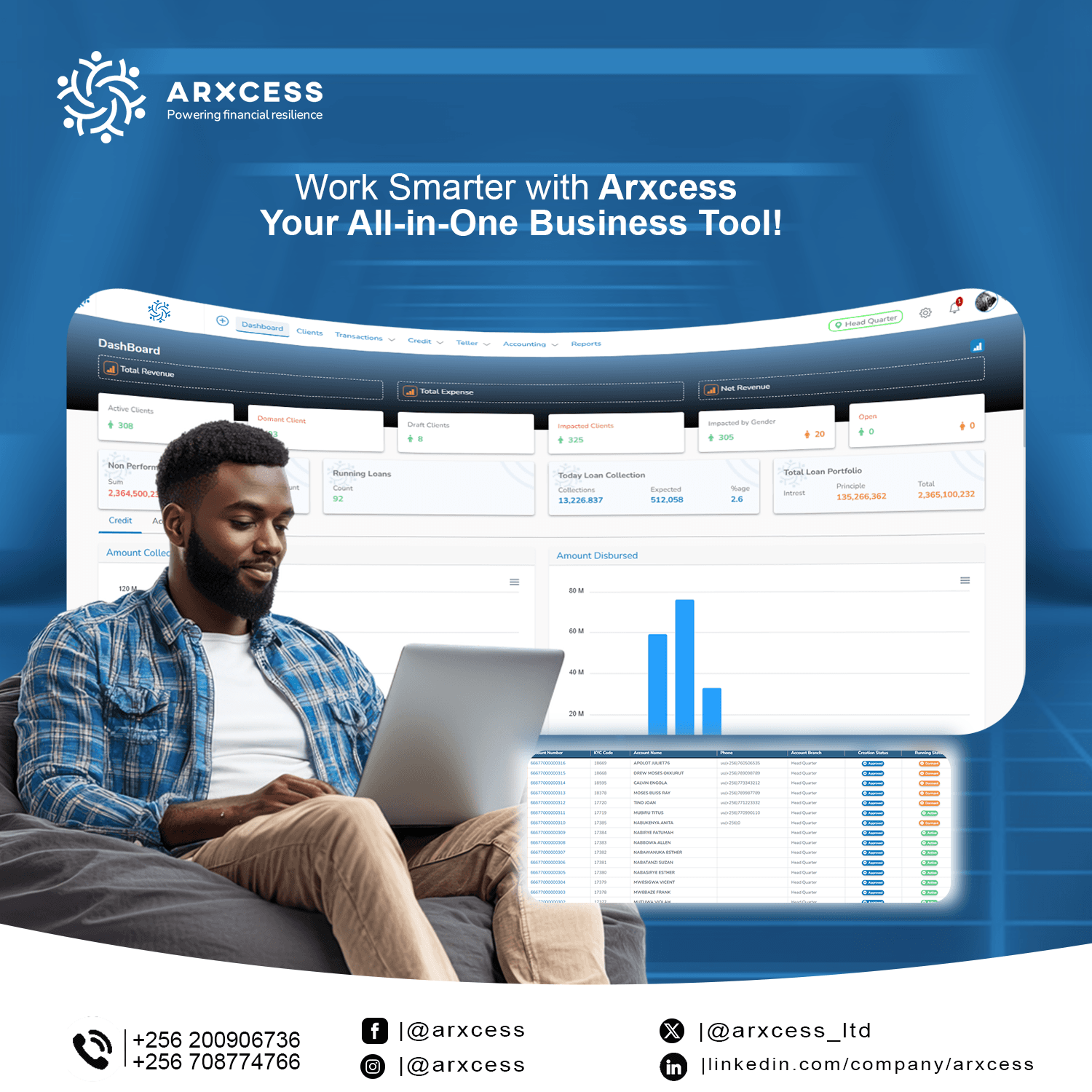
For example, a mid-sized bank adopting Arxcess Applications can implement digital account management, reporting, and analytics within weeks—tasks that would take months with traditional software.
The Business Case for SaaS
Operational Efficiency
SaaS automates repetitive processes, consolidates data, and improves workflow efficiency. A SaaS CRM, for instance, ensures your sales team always has the latest client data, reducing errors and improving customer interactions.
Example: Salesforce, one of the earliest SaaS platforms, helped companies reduce manual tracking errors by over 40% while increasing customer engagement.
Driving Innovation
By freeing IT teams from routine maintenance, SaaS allows companies to focus on innovation. Marketing teams can experiment with new automation tools, finance departments can use advanced analytics, and operations can leverage workflow optimization without infrastructure bottlenecks.
Example: Netflix uses cloud software to scale video streaming globally, enabling rapid innovation in recommendations, playback quality, and server management.
Enhancing Customer Experience
SaaS isn’t just about internal efficiency; it fundamentally changes how businesses interact with customers. Cloud-based platforms allow real-time personalization, faster response times, and seamless service delivery.
Practical Tip: Use SaaS analytics tools to track customer behavior and adapt your offerings in real-time, increasing loyalty and satisfaction.
How SaaS Enables Digital Transformation
Digital transformation is often misunderstood as simply “moving operations online.” In reality, it’s a holistic shift in strategy, operations, and culture. SaaS is a critical enabler:
Integration: SaaS platforms often include APIs and integrations to connect with other tools, creating a unified ecosystem.
Data-Driven Decisions: Cloud software captures and analyzes data in real-time, allowing proactive, informed decision-making.
Remote Accessibility: Teams can work from anywhere, enabling flexible and resilient business operations.
Example: A retail company using SaaS inventory management can dynamically adjust stock levels across multiple locations based on real-time sales data—a level of responsiveness impossible with spreadsheets or legacy systems.
Real-World Case Study: Arxcess Applications
Arxcess Applications demonstrates the potential of SaaS for modern businesses:
Problem: Traditional enterprise software created long implementation timelines and required frequent IT interventions.
Solution: Arxcess Applications provides cloud-based modules for finance, sales, HR, and operations, fully integrated and subscription-based.
Results: Businesses using Arxcess Applications report faster deployment (weeks instead of months), reduced operational costs, and improved interdepartmental collaboration.
This illustrates how SaaS isn’t just a software choice—it’s a strategic growth lever.
Common Myths About SaaS
“SaaS is only for tech companies.” Reality: Every sector—finance, healthcare, retail, and education—benefits.
“Cloud software is less secure.” Reality: SaaS providers invest heavily in security, often surpassing internal IT teams.
“It’s too expensive long-term.” Reality: While subscriptions incur ongoing costs, SaaS often reduces CapEx and total IT spend over time.
Practical Takeaways for Business Leaders
Start Small, Scale Fast: Begin with a critical function like CRM or project management and expand gradually.
Prioritize Integration: Choose SaaS solutions that integrate well with existing tools to maximize efficiency.
Invest in Training: Adoption depends on people, not just technology. Provide teams with resources to get the most from the platform.
Measure Impact: Track KPIs like efficiency gains, cost savings, and customer satisfaction to prove ROI.
Conclusion: Embrace the SaaS Revolution
The SaaS revolution isn’t a trend—it’s the new normal. Businesses that adopt cloud software strategically unlock scalability, efficiency, innovation, and enhanced customer experiences. Platforms like Arxcess Applications demonstrate how SaaS can accelerate digital transformation while reducing operational friction.
The question for leaders is no longer “Should we adopt SaaS?”, but “How fast can we leverage it for growth?”
Call to Action: Evaluate your current software stack today. Identify legacy systems that slow your growth, and explore cloud-based alternatives like Arxcess Applications to future-proof your business. The time to act is now—the SaaS revolution won’t wait.
Tags
Kigonya Timothy
Part of the Arxcess team, sharing insights on technology, business, and digital transformation.